The grammar of the held shot
What a camera refuses to cut away from is often the truest thing it can say.
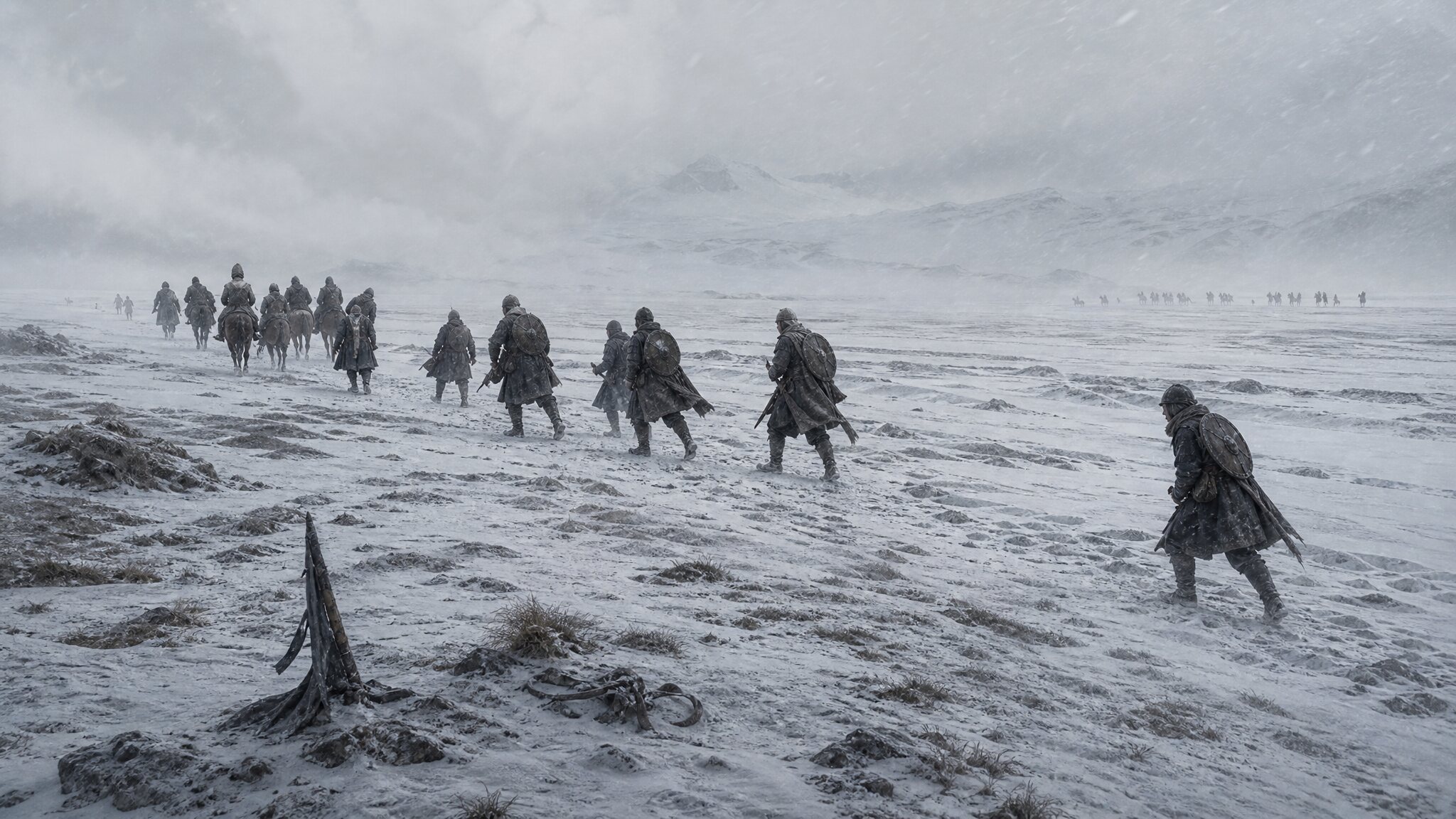
Modern film cuts fast. The average shot length has been falling for decades, and there is craft in that — momentum, rhythm, the pleasure of a well-cut sequence. But there is a different, older tool that an independent studio should never forget how to use: the long take, the held shot, the refusal to cut. When everything around a film is accelerating, holding still becomes the boldest thing a camera can do.
Cutting is telling; holding is trusting
Every cut is a small instruction. It says: now look here, now feel this, that is enough of the last thing. A cut is the director's hand on your shoulder, gently turning your head. There is nothing wrong with it. But a shot that refuses to cut hands the moment back to you. It says: I am not going to tell you when you have seen enough. Stay. Decide for yourself. The held shot trusts the audience, and audiences feel that trust even when they cannot name it.
A cut tells you where to look. A held shot trusts you to keep looking.
Time becomes weight
The long take does something no cut can: it makes duration physical. When we watch a character cross a great distance in real, unbroken time, the distance stops being information and becomes exhaustion, dread, or resolve. In a survival story, to cut away from the walk is to cut away from the point; to hold on it is to make the audience walk too. What you refuse to shorten, you make the audience carry.
Discomfort as meaning
Held shots can be unbearable, and that is precisely their power. Staying on a face one beat past comfort turns observation into intimacy or into accusation. The moment you want the film to cut and it will not is the moment you stop watching a character and start being implicated in them. Directors from Tarkovsky to the present have used this deliberately: the shot that outlasts your comfort is asking you a question about why you want to look away.
How we use it
We do not fetishize the long take; a film built entirely from held shots is as monotonous as one built entirely from fast cuts. The craft is in contrast. A film that cuts freely earns enormous power on the rare occasion it stops and holds — and a film that breathes slowly can make a single sudden cut land like a gunshot. What matters is that the choice is always a choice, never a default. When we storyboard, we ask of every important beat: does this moment want to be shown, or does it want to be endured? The answer decides whether we cut or hold.
This is one facet of how we design a scene's emotional tempo — a companion to our work on visual development, where the look of a world is built to serve exactly these decisions.
Frequently asked questions
What is a long take in film?
A shot held for an unusually long time without cutting. It makes duration physical, builds tension, and hands the moment to the audience to interpret rather than directing their attention with a cut.
Why do directors use long takes?
To build weight and intimacy, to make time and distance felt, and to trust the audience. A held shot can turn observation into unbearable closeness in a way that rapid cutting cannot.
Long take or fast cutting — which is better?
Neither on its own; the power is in contrast. A film that cuts freely gains enormous impact the rare time it holds still, and a slow film can make a single cut land like a shock.